Workspace6 min read
Build a room that lets you think
Your workspace is a set of instructions you give yourself every morning. Most of us have written them by accident.

Mara Ellison
Writer and editor
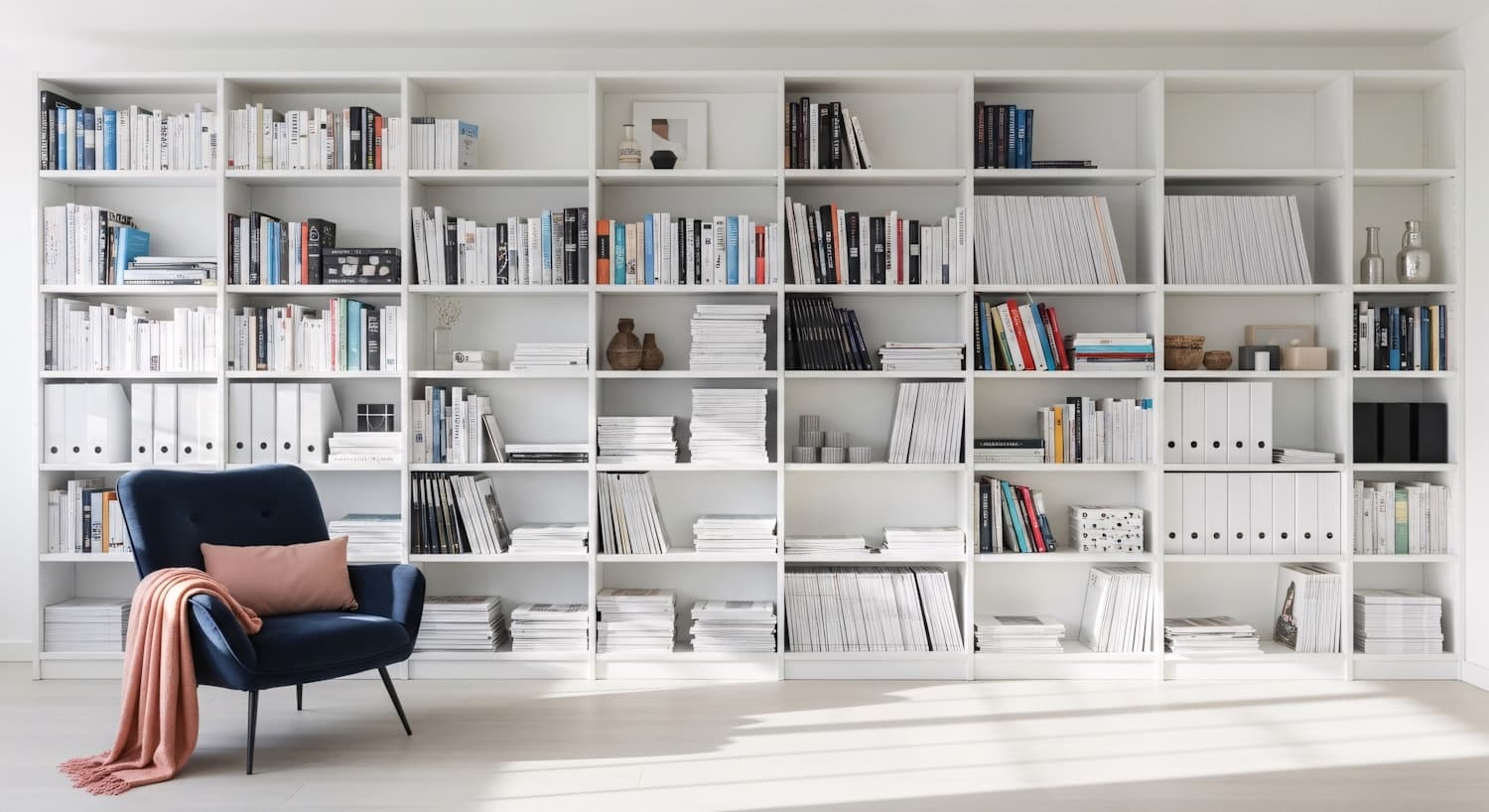
There is a particular chair in my flat where I have never once had a good idea. There is another, four metres away, where most of this blog was written. The furniture is not magic. The difference is what each chair points at.
A room is a set of defaults. It decides what is easy to start and what takes a small act of will. Arrange it carelessly and it will quietly make the wrong thing easiest.
Point the chair at the work
The seat where you think should face something dull. A wall, a bookshelf, a window with nothing happening in it. Not a doorway, not a television, not a corridor where people pass.
This sounds like superstition until you try it for a week. Attention leaks toward movement. Give it nothing to follow and it stays where you put it.
One surface, one purpose
The strongest rule I know is also the simplest: a surface does one thing. The desk is for making. The table is for eating. The armchair is for reading. When surfaces blur, so does the day, and you end up answering email in the chair where you used to read novels.
You do not need a bigger room. You need fewer things asking for a decision.
Make the good thing visible
Whatever you want more of, leave it out. Books on the arm of the chair, the notebook open at the current page, the instrument out of its case. Whatever you want less of, put it behind a door. The distance is trivial and the effect is not.
Light, then everything else
If you fix one thing, fix the light. Work near a window if you have one, and add a warm lamp low and to the side for the evening, not a ceiling light overhead. Rooms lit from above feel like offices. Rooms lit from the side feel like somewhere you would choose to sit.
None of this requires money. Move the chair, clear one surface, put the good thing where you can see it. Then notice, for a week, where you actually end up sitting.