Craft4 min read
Start on paper
Screens are wonderful for finishing things and terrible for beginning them. A defence of the messy first draft, drawn by hand.

Mara Ellison
Writer and editor
Every tool teaches you how to use it, and screens teach you to tidy. Open any design tool and it immediately asks for precision: exact spacing, a named colour, a font at a specific size. Those are finishing questions, and you are being asked them before you know what you are making.
Paper asks nothing. That is its whole advantage.
Bad drawings are the point
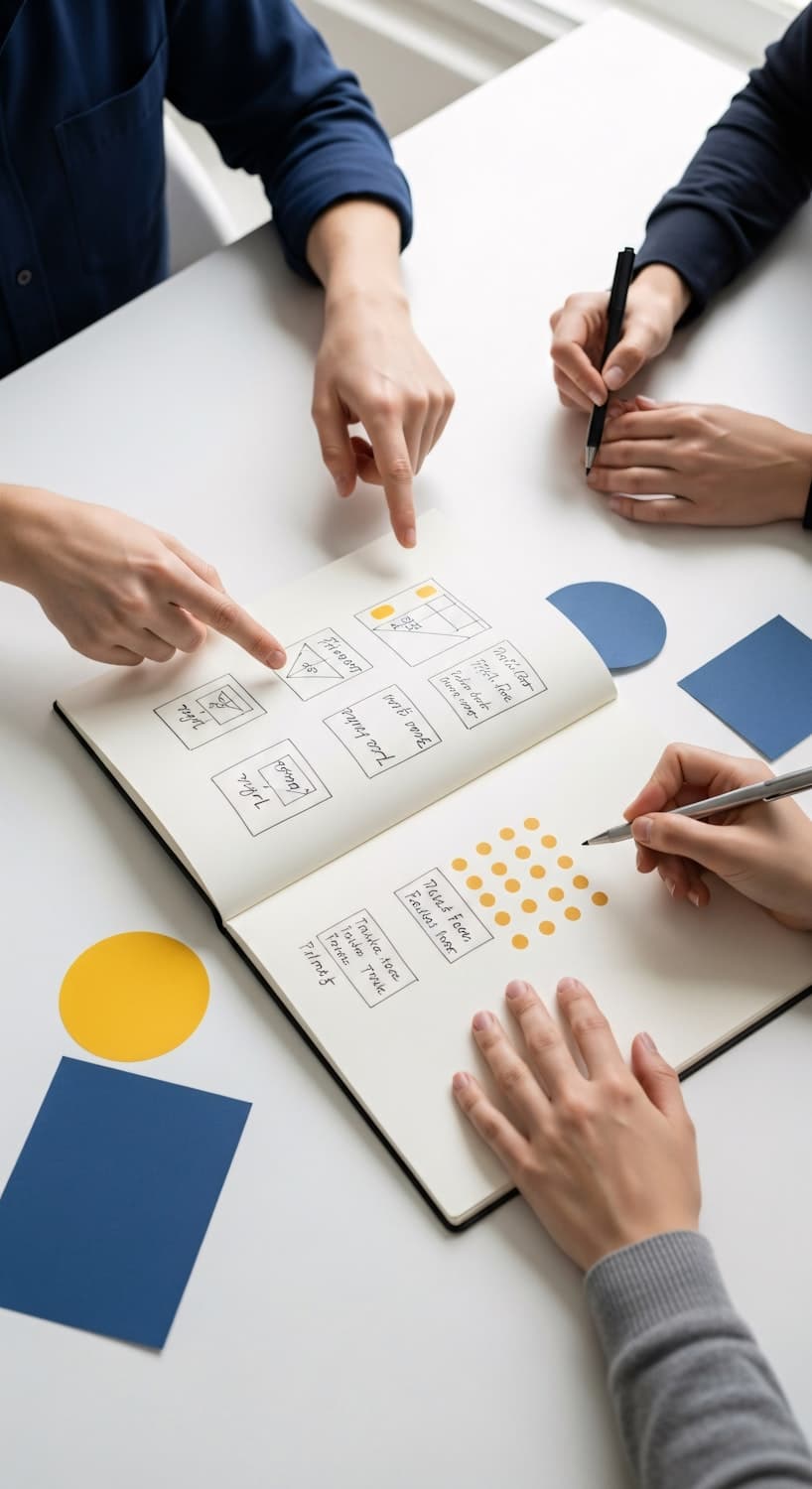
When six people crowd around a table with markers, nobody defends a rectangle. The sketch is obviously provisional, so it gets argued with. The same idea rendered neatly on a screen arrives looking finished, and finished things attract polite agreement instead of useful disagreement.
I have watched a team spend an hour discussing the shade of a button that should not have existed. Nobody questioned it, because it looked decided.
A rough sketch invites an opinion. A polished mockup collects compliments.
The three-page rule
Before anything gets built, the idea has to survive three pages of paper.
- Page one is the shape of the thing: what appears, in what order, and what the person is trying to do.
- Page two is what happens when it goes wrong: nothing loaded, the list is empty, the form was wrong.
- Page three is the smallest version that would still be worth using.
Most ideas die on page two, which is exactly where you want them to die. Page two is free. Page two costs a pencil.
Then move
Paper is not precious either. The moment the questions turn into finishing questions, spacing, weight, colour, rhythm, leave it behind and go to the screen. Staying on paper too long is its own kind of avoidance.
The rule is simply this: begin where the tool costs you nothing to be wrong.